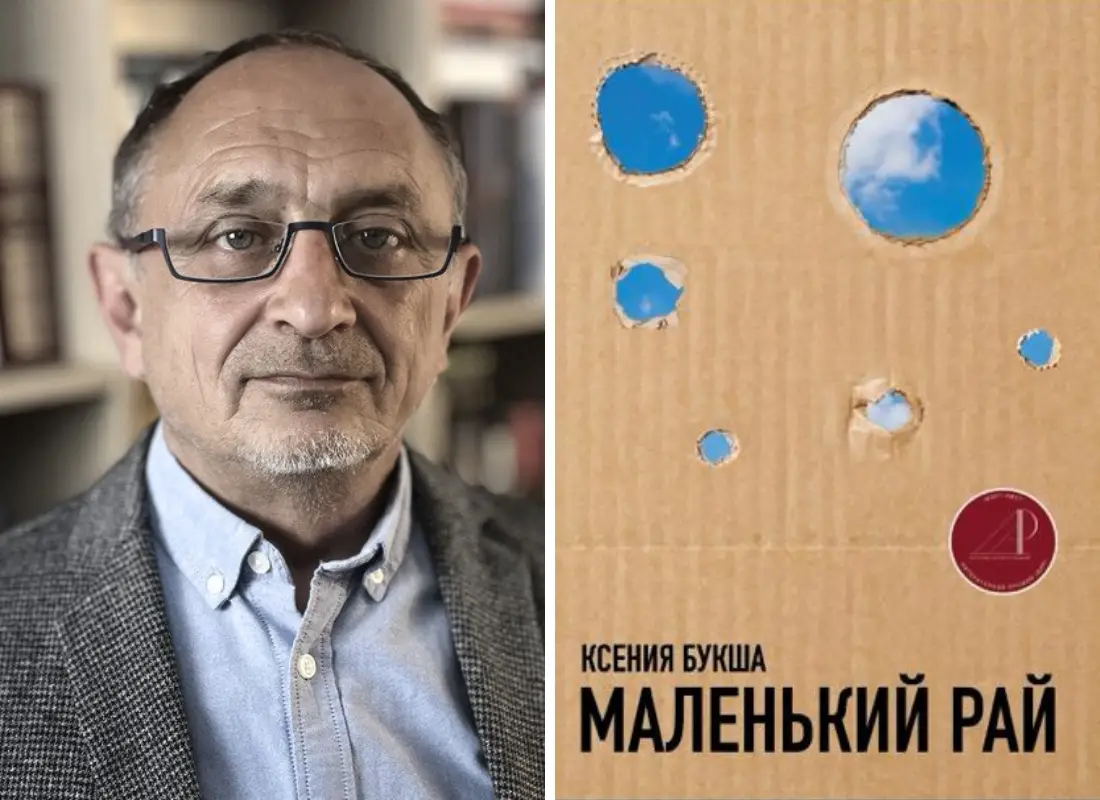
I was greatly impressed by the early novel Ksenia Bukshi “The Freedom Factory.” I set out to read it without any enthusiasm, since I am an “old reader,” a “literary pensioner.” And everything written by people born in the 1980s and 1990s can no longer fit into the “old skins” (skins in the sense of “vessels”) . The generation to which I belong carries around its “written bag” — with Nabokov, Andrei Bitov, and Trifonov — and considers everything after Makanin to be non-existent in prose, or existing only in the form of moss. And so I read Buksha and was amazed. It was a small, intimate story about an attempt to figure out something seemingly very simple — “the history of a Soviet factory.” As the ‘author’ makes his efforts, the history of the factory does not so much become entangled as it falls into the realm of “epistemological paradox.” The author does not mock, does not boast, does not sneer, but honestly follows the “path of knowledge,” yet he and the reader drift further and further away from this factory. Not only the factory, but also all the witnesses of its existence, and the author himself, and everyone else — as they advance in their knowledge, they become more and more ghostly, losing their outlines... In short, I was shocked by the whole style, the completely new and incomparable “epistemology” in this work by Buksha. However, I did not delude myself. I thought: well, maybe this Buksha is just crazy. She wrote one strange novel in a “shift of consciousness” and then sank back into the “moss”...
And yesterday I read it “Little Paradise”, published by Urushadze in 2025. This, my friends, is simply a masterpiece. The Lord arranged it so well that Buksha moved from Russia to Montenegro because of the war in Ukraine, and as a result wrote a novel-parable about the Bosnian war. More precisely, about the consequences of some war somewhere in the Balkans. This novel is a response to both the Ukrainian war and all the debates about “politics of memory” and “trauma processing.”
It's worth reading. It's very subtle, profound, and avant-garde—that is, it's not just fiction (although it's clear that Buksha is a good fiction writer), but a radical epistemological break, going beyond fiction to a level where great literature takes risks.
Alexander Morozov

What Are the Objectives of the Award?

The primary goal of the Award is to support authors and promote Russian-language literature worldwide. We welcome all who write and read in Russian, regardless of citizenship or place of residence. We aim to foster a Russian-language culture free from political and imperial influences.
How Is the Award Process Conducted?
The Award is given annually. The jury votes, with each member selecting between one and three works. The winner is the author whose work receives the most votes. Additionally, a reader’s vote (Crowdfunding) is conducted on the Award’s website, where readers can vote for authors and support them financially.
What Awards Are Provided?
The winner of the Award receives a grant to translate the work into English, French and German. Also, as part of the reader's vote, all collected funds are transferred to the authors for whom the readers voted.
When Does the Submission Period for the Competition Start and End?
Прием заявок на конкурс второго сезона премии начнется 1 сентября 2025-го и закончится 15-го октября 2025 года.
When will the list of finalists and winners be announced?
В январе 2026 года Совет Экспертов объявит список финалистов. Читательское голосование начинается в тот же месяц. В феврале-апреле члены жюри читают книги-финалисты, а победителей Премии и читательского голосования объявят в мае 2026 года.
What are the conditions for the nomination of a book for the award
В конкурсе второго сезона могут принимать участия произведения, изданные в 2024-м году. Произведения (роман, повесть, сборники рассказов и эссе, документальная проза), вышедшие отдельными изданиями или опубликованные в журналах. Номинировать на премию имеют право как издательства и редакции журналов, так и сами писатели или третьи лица (с согласия и письменного подтверждения автора). Тексты подаются к рассмотрению в электронном виде. Премия «Дар» открыта для всех авторов. Учитывая главные цели премии: продвижение современной русскоязычной литературы за пределами РФ и характер самого вознаграждение (грант на перевод) - приоритет будет отдаваться авторам, чьи произведения ранее не переводились на английский, французский и немецкий языки.