


The winner of the award is the author whose book will receive the most votes in the open voting of the Jury. The main award is a grant to translate the book into foreign languages.
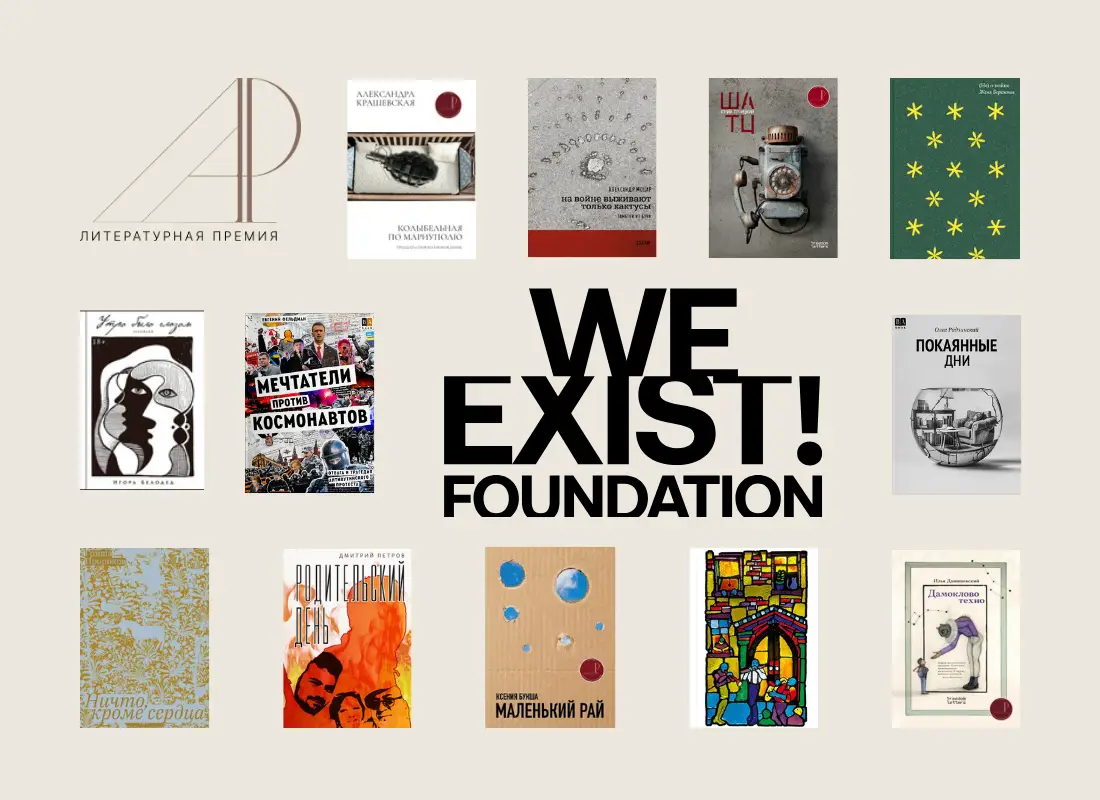
Read the Sample Translations from the books of all finalists.
The English translations of the excerpts were made possible thanks to the support of the WE EXIST! FOUNDATION.
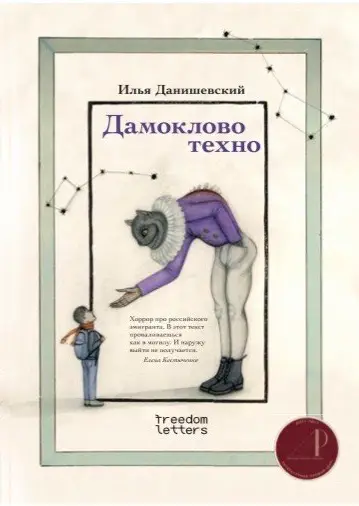
A novel in which the carefree macabre of the characters is paradoxically homologous to the complex reality, highlighting its most monstrous twists and turns, offers the reader a journey into the world under the stairs, a trip in your pocket: be brave, my friend, scratch the cat behind the ear, — there will be fairy tales capable of prolonging life (just don't stop telling them), tin girls torn apart by patrons, people with sharp edges, empty hopes, and something that, alas, even love cannot defeat this season.

A debut autofiction novel about asexuality, aromanticism, Christianity, and one summer in Tbilisi. The narrator moves from Russia to Georgia and falls in love through correspondence with someone living in Moscow, but soon begins to ask himself questions: What is love? What does it mean to fall in love? What does he really want from people? Documenting his first summer in exile: walks around the city, hanging out in bars with friends, trips to the mountains — Grisha Prorokov explores his own experience of asexuality and aromanticism, drawing on the history and culture of Christianity: the letters of the Apostle Paul, the tapestries “Lady with a Unicorn” and the image of Mary Magdalene.
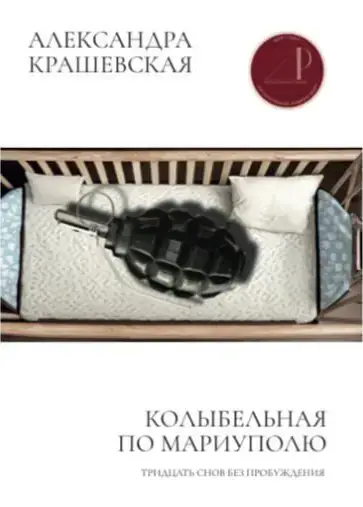
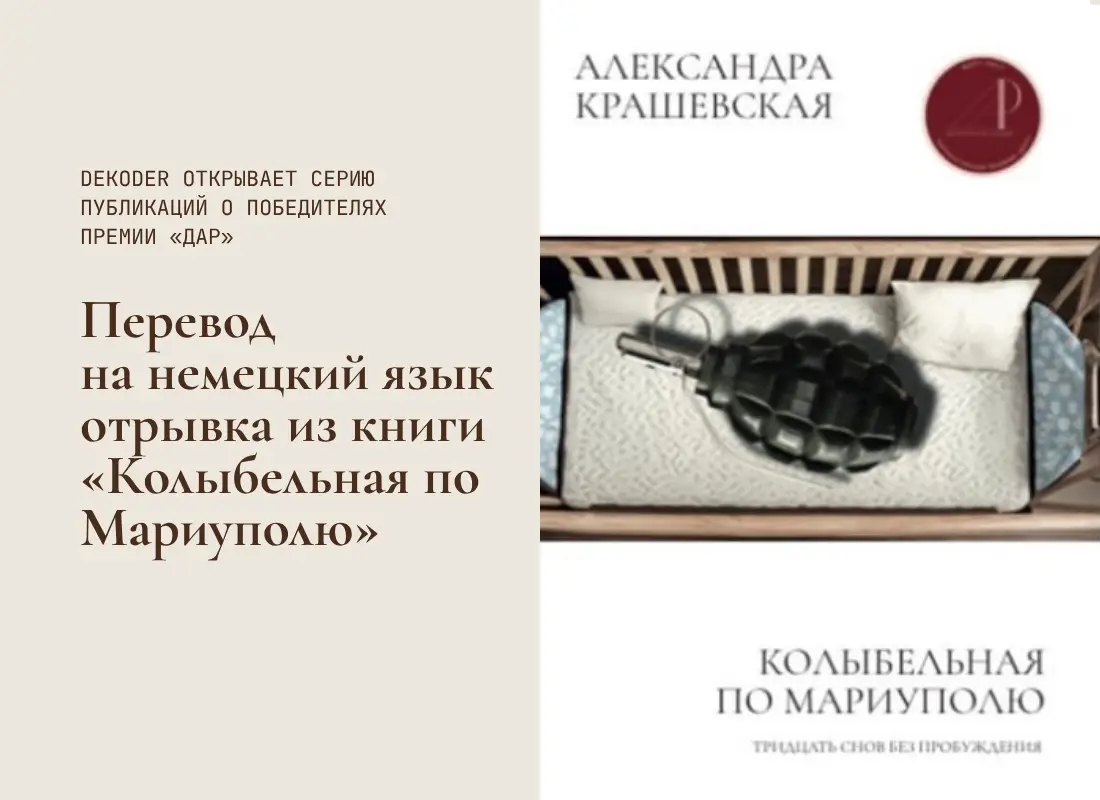
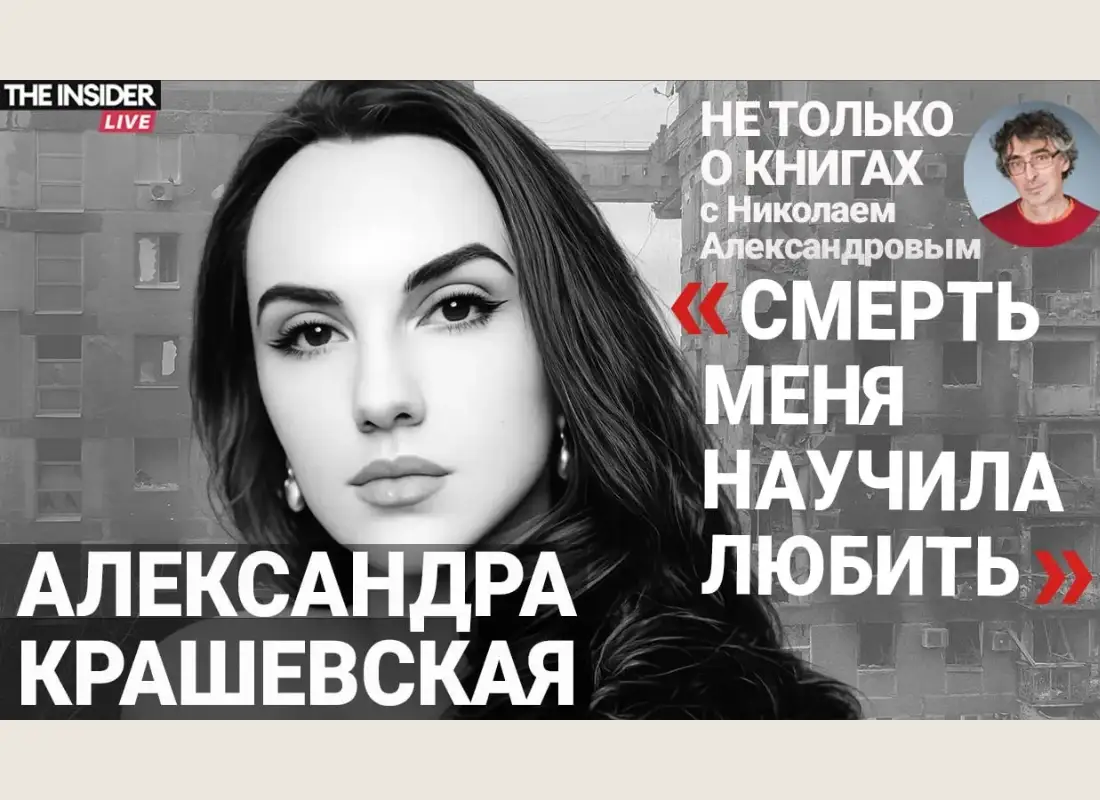
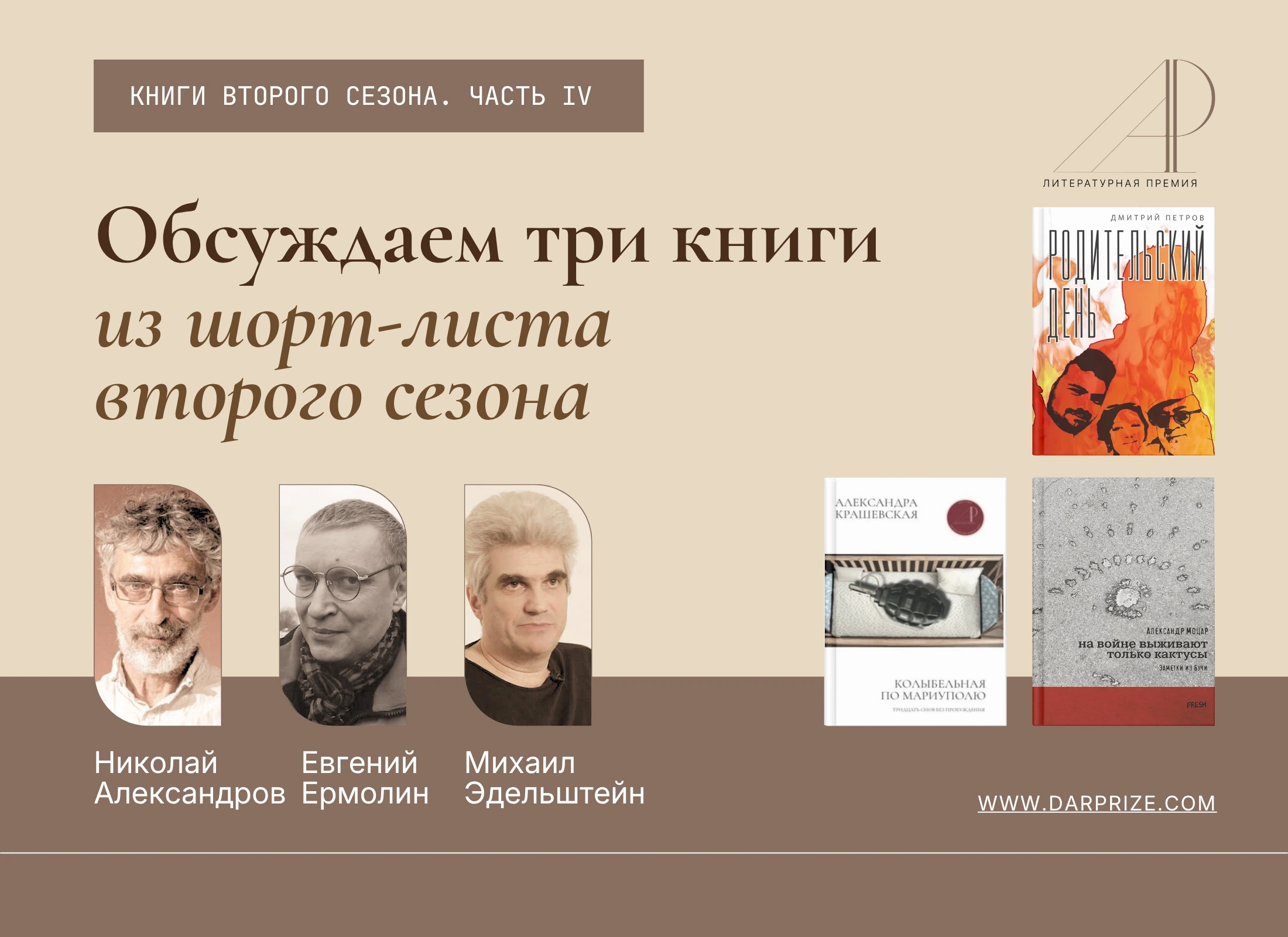
Spring 2022 in Mariupol. This book immerses the reader in the events of that time. Amidst rocket fire, the voice of a young woman can be heard, sometimes calm and hopeful, sometimes breaking into a desperate cry. We are presented with a kaleidoscope of images of unbearable reality. After what she has been through, the author manages to do the almost impossible — to keep hope alive.

Tatyana Zamirovskaya's first non-fiction book is a collection of essays, memories, and reflections on memory and forgetting, music and love, emigration and ties to Belarus through the ghostly identity of a person who once believed that music is stronger than death and text is more important than life. The book originated from a long essay about experiencing the war in Ukraine, “Spending The War Without You.” , in which I describe the year 2022, when I was working in news (Voice of America), experiencing intense emotional detachment, and going to all the concerts of my favorite musicians from my youth in order to feel alive again and relearn how to cry.

The war began on television. But it didn't stay there. A Moscow saga during Putin's war in Ukraine. The Naydenov family lived their lives, while outside their apartment windows, a different life was being lived, controlled by different people. The Naydenovs thought that's how it would always be—two parallel, unintersecting lives in one country. Or two countries—their own private one and the rest of Russia. Then the war started, and everything changed. Now they had to decide whether to run or fight. Or try to put back together what the war had broken. The war started on TV. Then the tanks rolled off the blue screen and into our apartments. Along with the war.

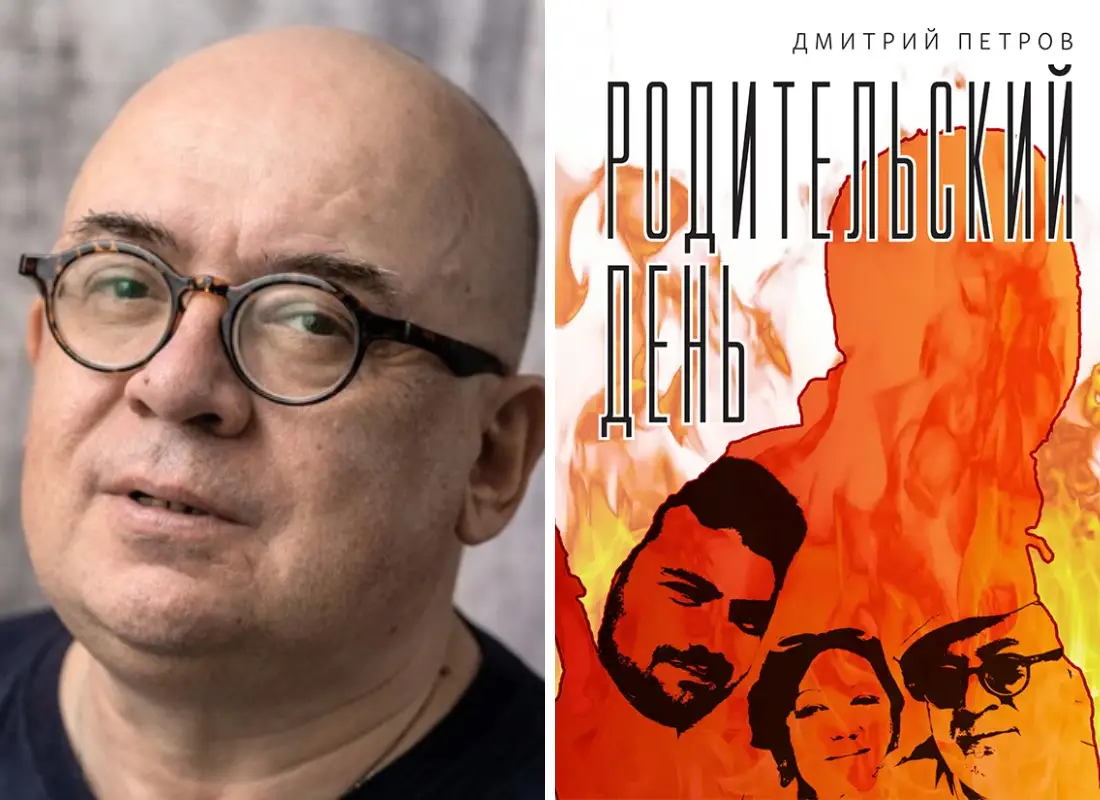
The story “Parents' Day” is a vivid, poignant portrait of life during wartime, where events are intertwined with memories and reflections. Against the backdrop of a war-torn but vibrant city, the main character tries to understand and maintain a connection with his son in the midst of tragic events. Through their dialogues, internal monologues, and encounters with people, he reveals the generational conflict of worldviews, the theme of duty, personal responsibility, and love. Death for one's beliefs is a reality of our time. This book is not only a family story, but also a direct look at war, its everyday nature and cruelty. The synthesis of documentary accuracy, lyricism, and philosophical reflection transforms Parent's Day into a text that touches the deepest strings of the soul and encourages us to live when it seems that we no longer have the strength to do so.

In the collection of short stories “The Morning Was an Eye” by Igor Beloded, a semi-finalist for the Big Book Award, there are, on the contrary, plenty of oddities. Igor Beloded, as can be seen from his novel The Great Mother, published by RIPOL Classic, and the collection of short stories Don't Talk About Him (Alpina.Proza, 2023), is more of a “writer for writers” than a writer for readers. However, in the short story format, the complexity beloved by the author takes on a concentrated form. Beloded's stories are like a mixture that can and should be taken in one gulp. Two stories a day, seven days a week, for a successful course of treatment for a lack of beautiful literary language and (straight) linearity of time.

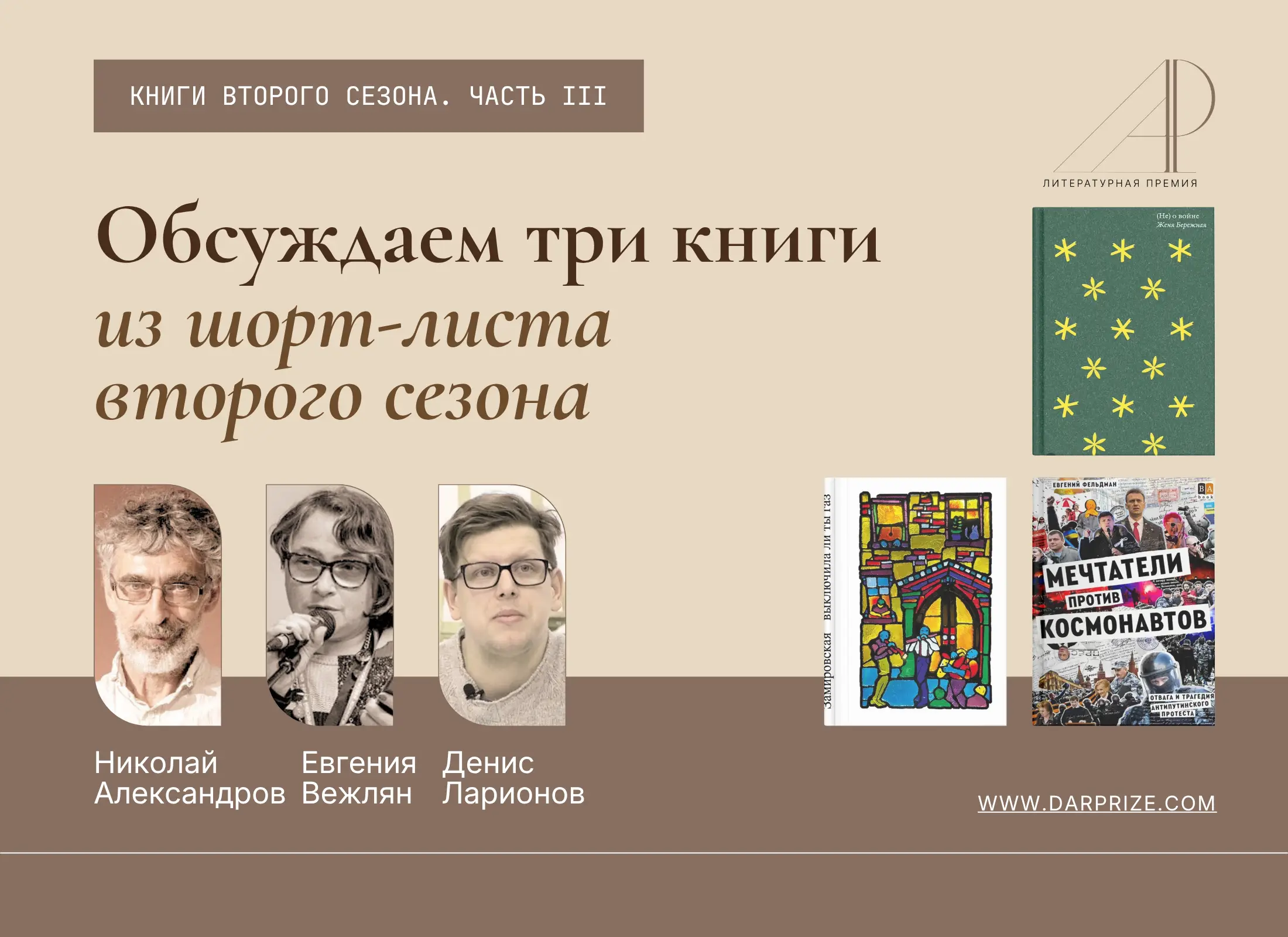
On February 24, 2022, Ukrainian Zhenya Berezhnaya woke up to a call from her relatives in Kharkiv: war had begun. Her familiar life in beloved Kyiv, where Zhenya wrote fairy tales for adults, taught, and hosted a podcast about literature, was over. Sirens and nights spent in basements, evacuation, fleeing, the loss of a loved one, attempts to rebuild her life in a new country — all this is described in Berezhnaya's autobiographical novel (Not) About War. This book is not really about war — it is about the experience of overcoming trauma, about how, thanks to creativity and the support of caring people, there is a place for freedom, love, and hope in a terrible reality.

You have seen Yevgeny Feldman's photographs, even if you don't know who took them. The panorama of the rally on Bolotnaya Square, Alexei Navalny with his “dosirak” and on his way to the Central Election Commission, clashes with Berkut on Maidan, the “parade of prisoners” in Donetsk, the human chain in Minsk — Feldman's photographs capture an entire era, and no one else has seen so many of its key events from such close quarters. In just a few years, the teenager who used to go to punk concerts with his camera became Russia's most famous documentary filmmaker — and the country descended into brutal repression and full-scale war. To honestly show the main stages of this journey, Feldman risked his life many times and broke the rules. Therefore, the book in which he talks about his work reads both as a tragedy and an adventure novel.
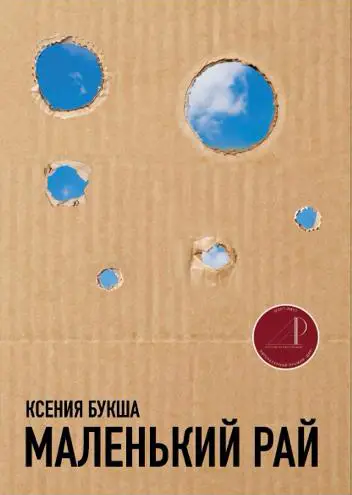
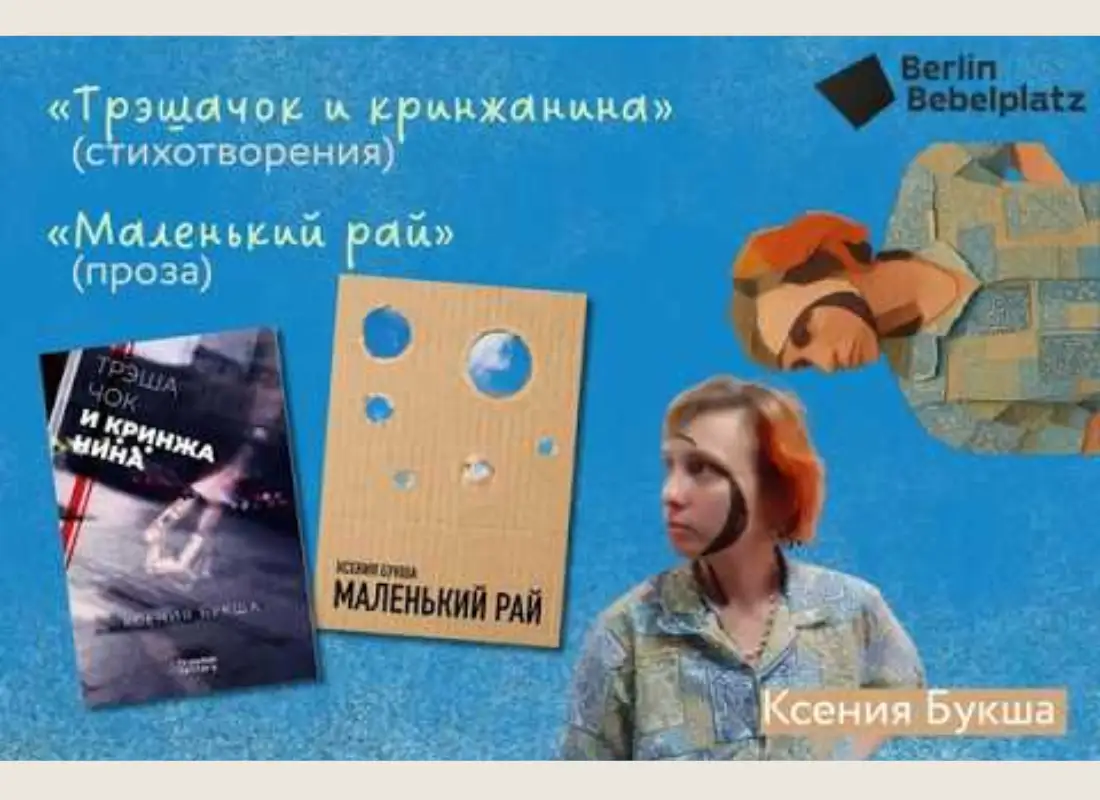
«Маленький рай» — первая в истории продолжающейся войны попытка рефлексивно заглянуть в будущее: а что будет через 15 лет после её окончания?
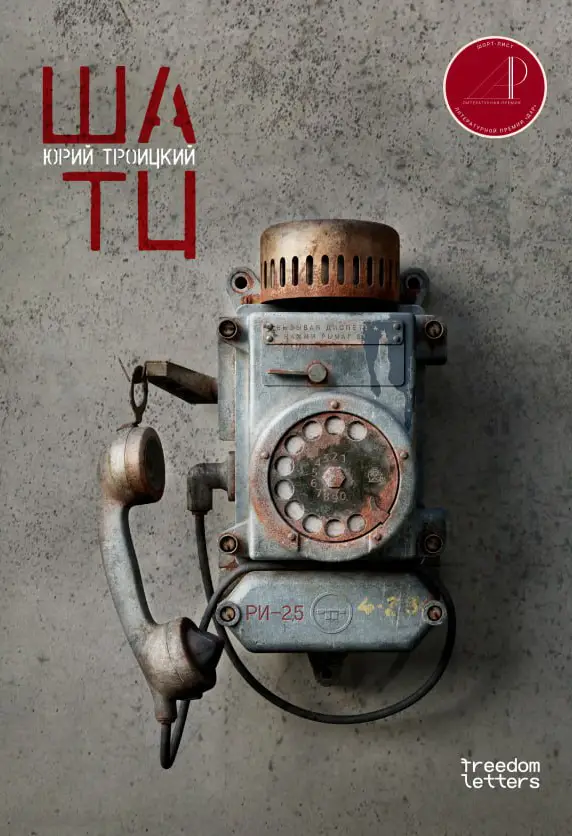
The protagonist of Yuri Troitsky's debut novel is a modern trickster. We don't know his first or last name, only the cute German word “Schatz” — “treasure” — which he and his wife use to refer to each other. Schatz is an entrepreneur who made his career in the 1990s and 2000s and regularly finds himself in various predicaments, some absurd, some dramatic, and some hopeless. Nevertheless, he manages to get out alive every time. We watch the hero grow up and come of age in the Moscow suburbs and Moscow, then we see him in Riga, London, and seaside resorts. Despite the circumstances, Schatz remains a human being everywhere, even if, like his famous predecessor, he tries to practice relatively honest ways of taking money from the population. We will see the hero for the last time on February 24, 2022, in Odessa — but, of course, this is not the end of his life...

"...The first rupture of war. You still don't understand, don't realize what war is. You still think it's a local event that will freeze in history, in your own memory, as a vivid episode that you can later recall as a tragicomic curiosity. You don't yet know that at this very moment your world has shattered into thousands of shapeless, ugly fragments. A person's world ceases to be a coherent story and falls apart into episodes — sometimes disjointed, random — in which old friends and acquaintances are often lost, but new shadows of a new reality appear.
Expert Council

Mikhail Edelstein
Literary scholar
Evgeniya Vezhlyan
Poet, literary critic, essayist, literary scholar and sociologist of literature
Elizaveta Birger-Eroğlu
Philologist, translator, literary critic, curator of cultural events, and manager of the bookstore "Poltory Komnaty" in Istanbul
Nikolai Aleksandrov
Cultural and literary scholar, essayist, journalistMembers of the Jury
The award jury comprises professional writers, authors, prominent figures from culture, science, and education, as well as public personalities

Mikhail Shishkin
Writer, Jury Chairman
Polina Barskova
Poet
Giulia Marcucci
Slavist, translator
Dmitry Kuzmin
Poet, translator, publisher
Andrey Bilzho
Artist
Luba Jurgenson
Writer, slavicist, translator
Georgi Borissov
Poet, translator, publisher
Carina Cóckrell-Ferré
teacher, publicist, novelist
Demyan Kudryavtsev
Poet, media manager
Vitaly Komar
Artist
Sergey Nikolaevich
Journalist, theater critic, writer
Ilya Vinitsky
Literarty scholar
Tamara Eydelman
Author of the channel History "Lessons with Tamara Eidelman"
Sergey Gandlevsky
Poet, prose writer
Irina Scherbakova
Historian, chairman of the board Memorial-Zukunft (Berlin)
Elena Fanailova
Poet
Rosemarie Tietze
Translator
Vera Pavlova
Poet, librettist, performer, musician
Mikhail Gigolashvili
Writer, artist, publicist, literary scholar
Andrey Makarevich
Musician, artist, poet, writer
Mark Lipovetsky
Philologist, literary scholar
Oleg Lekmanov
Philologist, writer
Ilya Kukulin
Cultural historian, cultural sociologist, literary critic
Dmitry Krymov
Theater and film director
Yuli Gugolev
Poet
Ksenia Larina
Journalist, critic, television and radio presenter
Sergei Solovyov
poet, writerFounders and Co-Founders
Mikhail Shishkin
Writer, Jury Chairman
Anastassia Forquenot De La Fortelle
Scholar of Russian literature, University of Lausanne
Mikhail Epstein
Philologist, philologist, philosopher, cultural critic, essayist
Vladimir Jurowski
Musician, conductor
Grigory Chkhartishvili
Writer
Sasha Filipenko
Writer
Artemy Troitsky
Сritic, academic, broadcaster
Lyudmila Ulitskaya
Writer
Vitaly Mansky
Film director, president of the IDFF Artdocfest
Roma Liberov
Film director, producer, the founder of the We Exist! Foundation. (UK)
Sergey Kuznetsov
Writer, journalist, educator
Armen Zakharyan
Philologist, lecturer, author of the literary project "Armen and Fyodor"
Anton Dolin
Film critic
Dmitry Glukhovsky
Writer
Alexander Genis
writer, essayist, broadcaster, cultural critic
Ivan Vyrypaev
Film and theater director, playwright, screenwriter, producer, actor
Tomas Venclova
Poet, essayist
Dmitry Bykov
Poet, writer, journalist, literary critic
Ulrich Schmid
Historian, cultural history of Eastern Europe
Gervaise Tassis
Slavist, the University of Geneva
Ilma Rakusa
Writer, translator, literary critic
Georges Nivat
Slavist, historian of ideas
Jean-Philippe Jaccard
Literary scholar, the University og Geneva
Kulturus

European Commission

Forum of Free Culture SlovoNovo
Award Partners












News about the Gift Award
 Event
Event
Prague Book Tower Programme: Meeting with the Dar Prize Laureates on September 11
 Event
Event
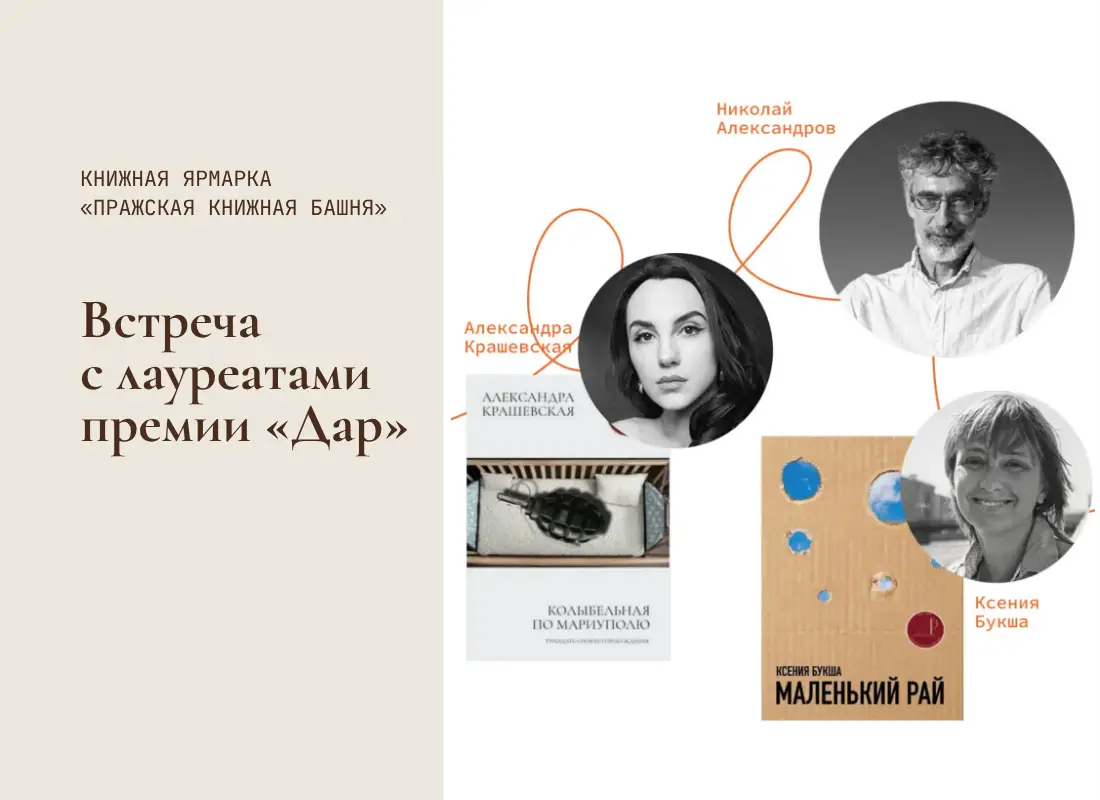
September 11: Meeting with the "Dar" Prize Laureates at the "Prague Book Tower"
 About Dar Prize
Literary Hub Publishes an Article About the Winners of the Dar Prize
 News
News
Submissions Are Now Open for the Third Season of the Dar Literary Prize
 Interview
Nikolai Alexandrov on Literature, Criticism, and the Contemporary Literary Process
 News
News
Dekoder Has Published a Translation of an Excerpt from Ksenia Buksha’s Novel “A Little Paradise”
 News
News
Dekoder Has Published a Translation of an Excerpt from Oleg Radzinsky’s Novel “Days of Repentance”
 Video
Video
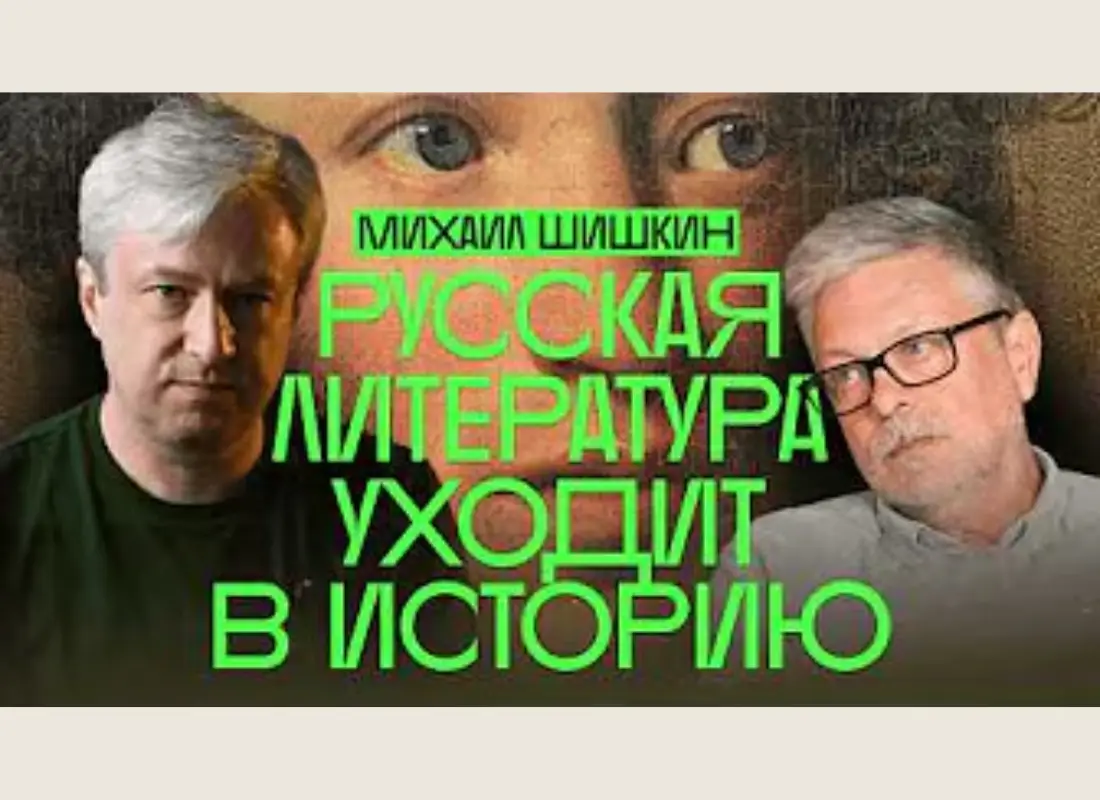
Mikhail Shishkin on the Dar Prize and the Future of Russian Literature
 News
News
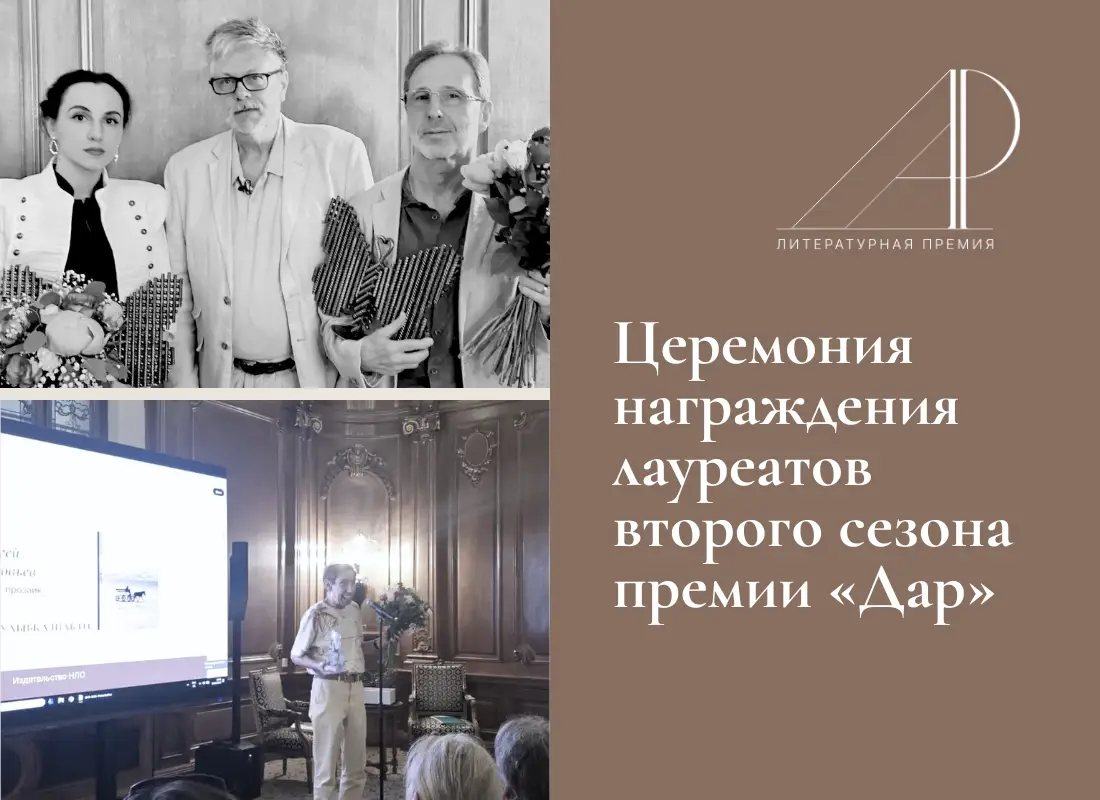
The Award Ceremony for the Winners of the Second Season of the Dar Prize Took Place in Montreux
 Video
Video
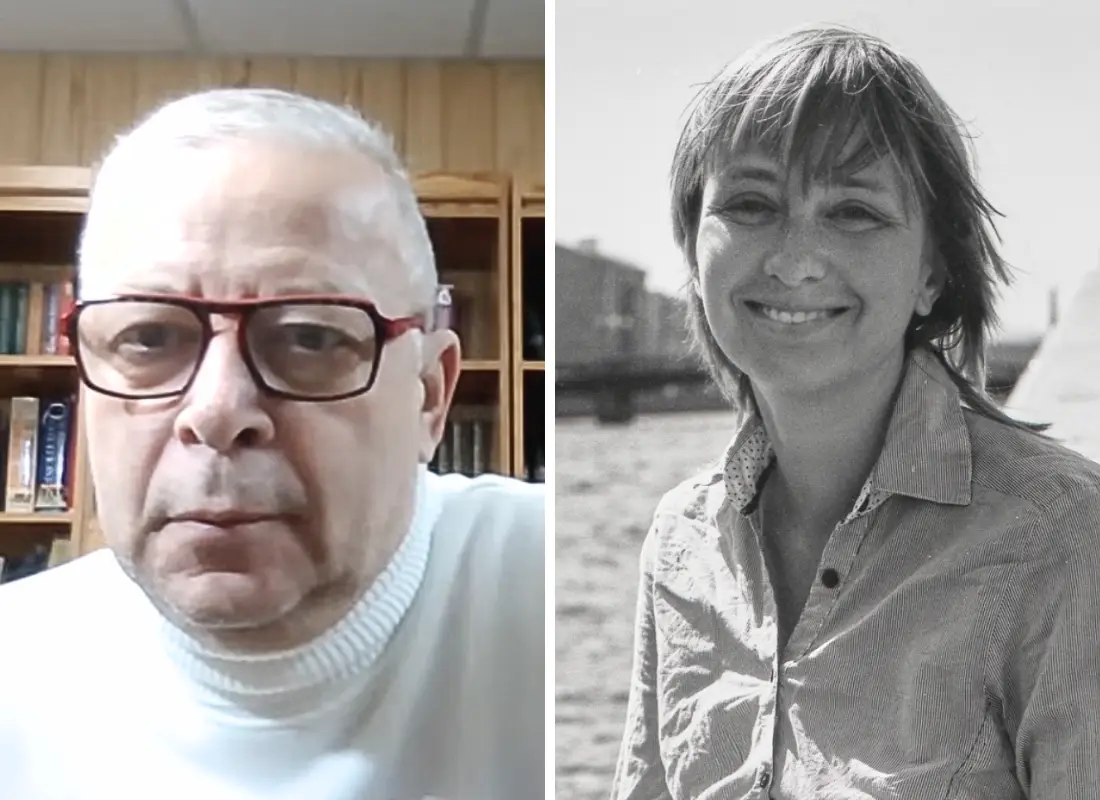
Ksenia Buksha on Petersburg, Poetry, and the Novel “A Little Paradise”
 Video
Video
Дмитрий Петров о книге «Родительский день». Обсуждение в Эссе-клубе Жени Вежлян
 Video
Video
Igor Beloded on the Ideal Text, Love, and the Novel Morning Was an Eye
 News
News
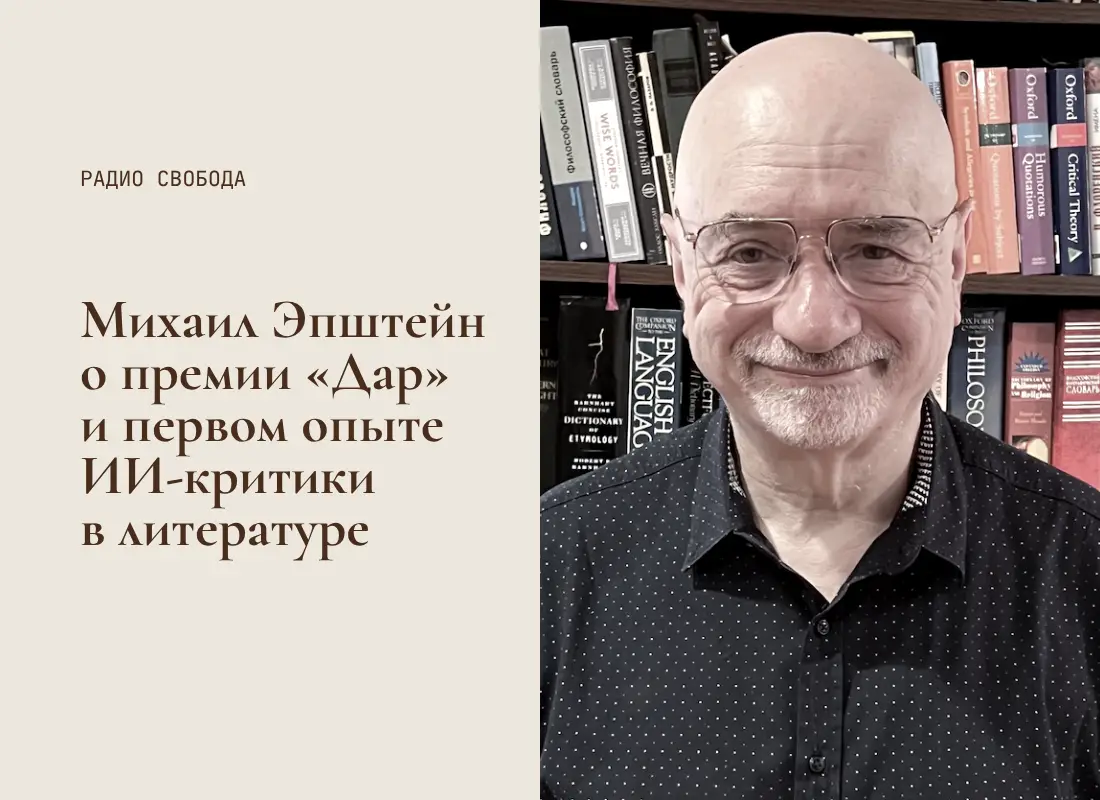
Radio Liberty: Mikhail Epstein on the Dar Prize and the Phenomenon of the AI Critic
 News
News
Dekoder. German Translation of an Excerpt from Alexandra Krashevskaya’s “Lullaby for Mariupol”
 Video
Video
Oleg Radzinsky on Family, Emigration, and the Novel Days of Repentance
 Video
Video
What Should We Be Reading in Russian Today? A Conversation at the 2026 Berlin Book Fair
 Video
Video
Dar Prize Laureate Alexandra Krashevskaya in Conversation with Nikolai Alexandrov
 Video
Video
A Meeting with Ksenia Buksha | Berlin Book Fair 2026
 News
News
The Winners of the Second Season of the Dar Literary Prize Have Been Announced
 Video
Video
Testimony of War. Discussing the Books Shortlisted for the 2026 Dar Prize. Part 4
 News
News
Sample Translations of Dar Prize Finalists, with support from the WE EXIST! FOUNDATION
 About Dar Prize
“People Have Been Thrown Out of Their Biographies.” A New Discussion of the Dar Prize Shortlist
 Event
Event
The Dar Prize at the Berlin Book Fair
 About Dar Prize
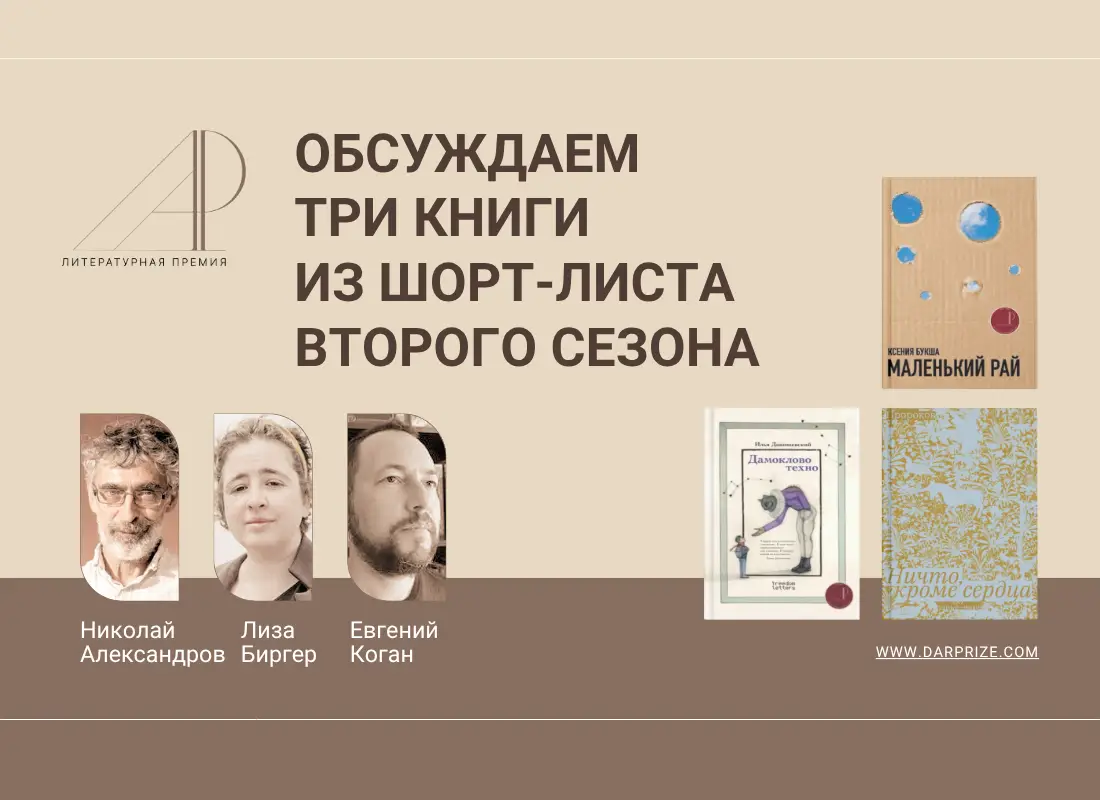
What to Read? Literary Critics Discuss the Shortlist of the Dar Prize, Season 2. Episode 2
 Book
Book
Evgeny Feldman on the book Dreamers Against Cosmonauts, protests, and emigration
 About Dar Prize
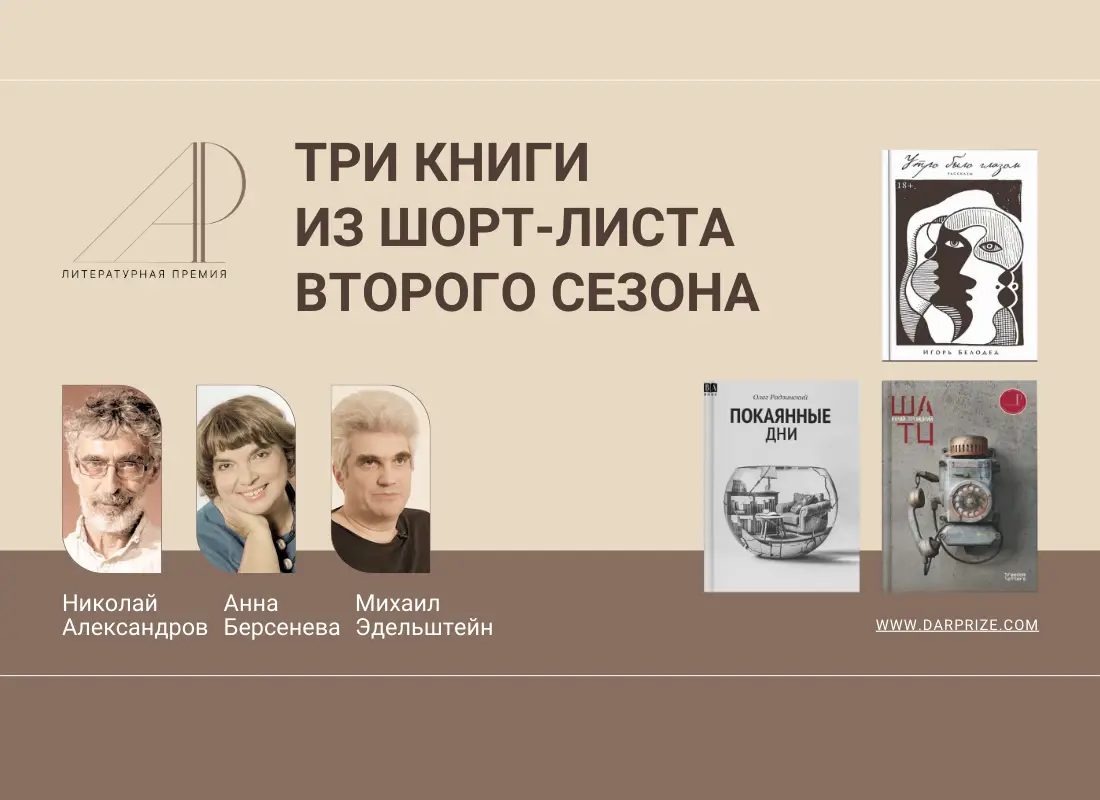
What to read? Literary critics discuss the shortlist for season 2
 Book
Book
Ilya Danishevsky on the novel Damoklov Techno and resistance to violence
 About Dar Prize
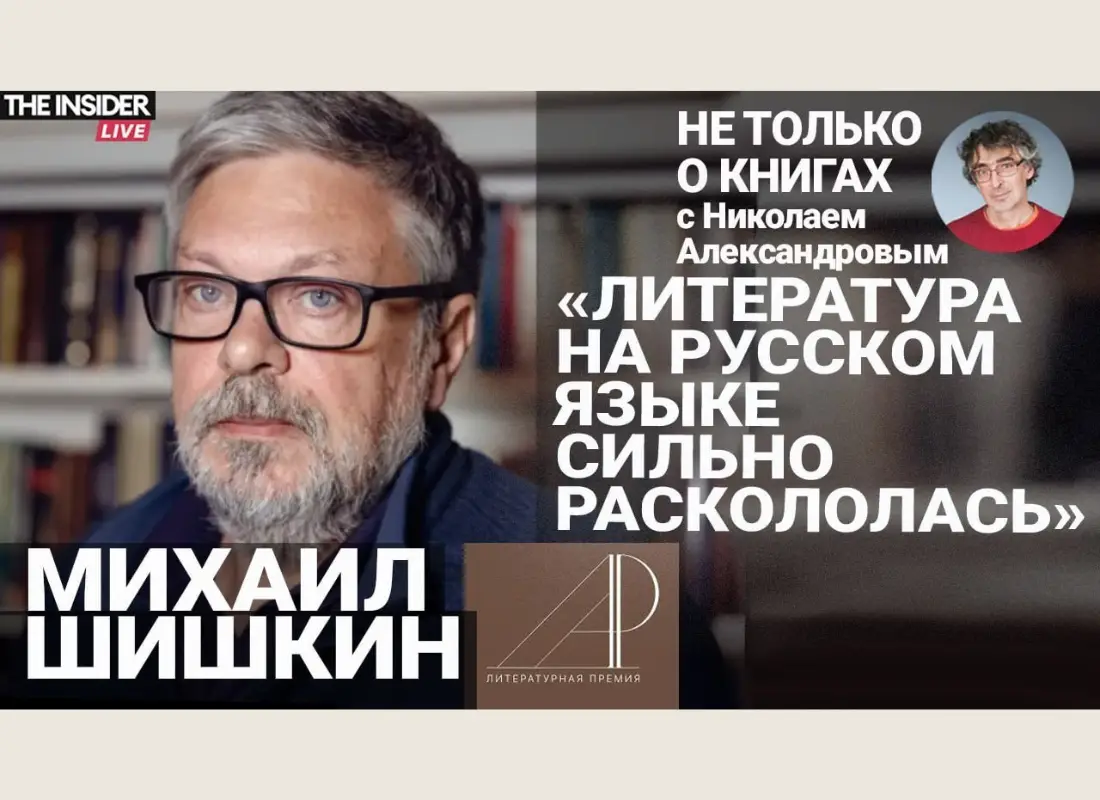
Mikhail Shishkin on the program “Not Only About Books” with Nikolai Alexandrov
 News
News
The Dar Prize logo on book covers
 News
News
We announce the list of finalists for the second season of the independent literary prize “Dar”
 News
News
Second season of the Dar Award. Shortlist announcement on January 29
 About Dar Prize
Results of the application collection for the second season of the Dar Prize competition
 About Dar Prize
Interview with Mikhail Shishkin in Novaya Gazeta Europe on the recognition of the Dar Prize as a foreign agent
 News
News
For the opening of the second season of the Dar Prize
 About Dar Prize
Results of the first season of the Dar Prize and plans for the second season
 News
News
Statement by Mikhail Shishkin, Chairman of the Jury of the Literary Prize “Dar”
 News
News
Statement by Mikhail Shishkin, President of the Jury
 News
News
Statement of the winner of the contest of the first season of the Literary Prize “Dar”
 News
News
Open letter from the winner of the Dar Award of the first season Maria Galina
 About Dar Prize
Mikhail Shishkin - chairman of the jury of the independent Literary Prize “Dar” announced the results
 News
News
Winners of the Dar Award of the first season
 News
News
Eugenia Vezhlyan: “A lot of things need to look for names again”
 News
News
Speech by Mikhail Shishkin at the Berlin Bebelplatz Book Fair
 About Dar Prize
Anatoly Bely shares Mikhail Shishkin's letter and urges support for the Dar Prize
 About Dar Prize
Презентация литературной премии «Дар» на Берлинской книжной ярмарке Berlin Bebelplatz
 About Dar Prize
The people are worried about whether the tsar is a real tsar. Writer Mikhail Shishkin
 About Dar Prize
Mikhail Shishkin on the Dar Prize, the Russian language, and resistance to the regime.
 Event
Event
April 4 in Berlin presentation of the Literary Prize Dar at the Berlin Book Fair - Berlin Bebelplatz
 About Dar Prize
Independent Literary Prize “Dar”: “Now is the time to create a new type of culture in the Russian language”
 About Dar Prize
Michael Epstein on the Dar Prize. This is the gift of Freedom
 About Dar Prize
Ivan Vyrypayev on the Dar Prize for Literature. Literature is possible even in conflict with language
 About Dar Prize
Maria Galina, Nikolay Kononov and Mikhail Shishkin about the Dar Prize in an interview with 3Sat
 About Dar Prize
Nikolai Alexandrov: “Literature is under threat”
 About Dar Prize
Poet Georgi Borisov joined the jury of the award against Putin's regime
 About Dar Prize
Alexander Morozov on the Dar Prize. New names beyond the influence of the Kremlin
 About Dar Prize
Alexander Delfinov on the Dar Prize. Books to be read
 About Dar Prize
Then & Now Podcast with Teresa Cherfas - Mikhail Shishkin on the Dar Prize for Literature
 About Dar Prize
Grigory Chkhartishvili on the Dar Prize: supporting free literature
 About Dar Prize
How to preserve Russian literature under Putin? Mikhail Shishkin on the Dar Prize and the crisis of culture
 About Dar Prize
The Dar Prize: what it is and who has been shortlisted
 News
News
We congratulate the shortlisted finalists for the Dar Literary Prize!