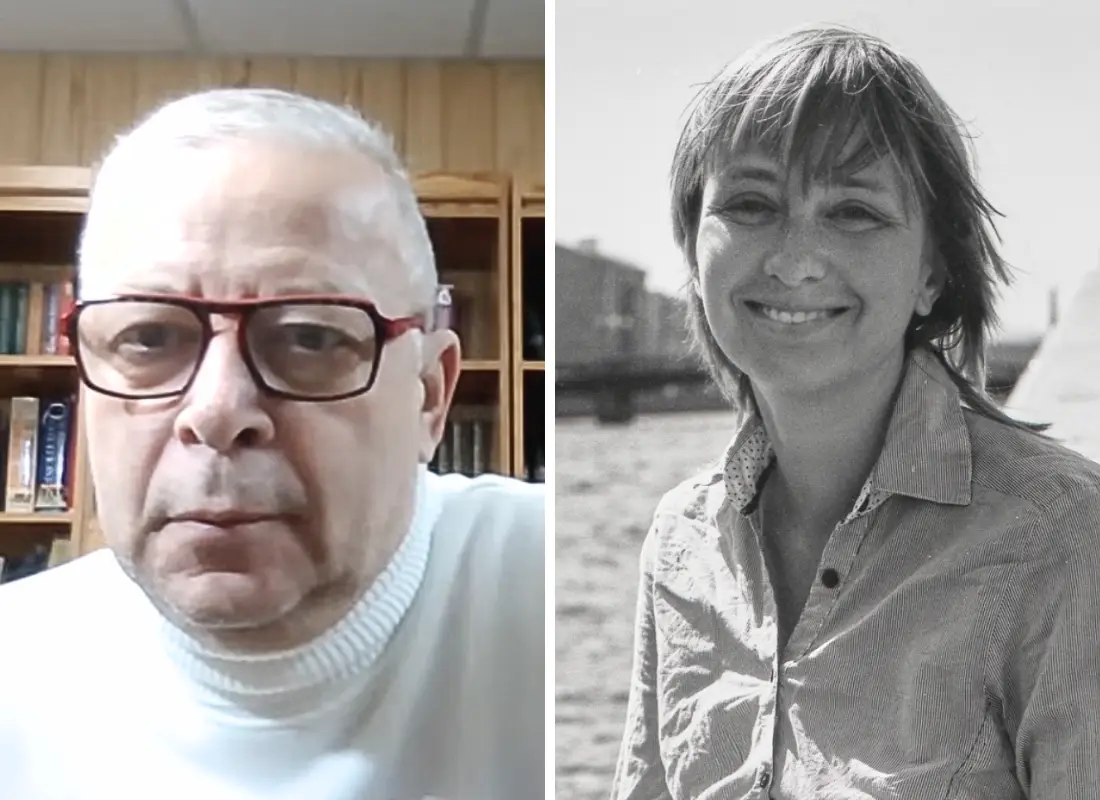
On Gennady Chernov’s channel “Chronicle of Culture,” an interview with writer and poet Ksenia Buksha has been published — winner of the second season of the Dar Prize and author of the novel "A Little Paradise".
The conversation ranges across many different topics: Petersburg in the 1990s, Silver Age literature, the work of Alexander Vvedensky, the novel “Freedom Factory,” and contemporary prose. A separate part of the interview is devoted to Ksenia Buksha’s poetry — the author reads her poems and reflects on the place of poetry in today’s literary process.
The conversation also turns to the novel “A Little Paradise,” which brought Ksenia Buksha victory in the second season of the Dar Prize. Can this book be considered a dystopia, or does it simply capture the reality of our time with precision? The answer to this question becomes one of the central themes of the discussion.

What Are the Objectives of the Award?

The primary goal of the Award is to support authors and promote Russian-language literature worldwide. We welcome all who write and read in Russian, regardless of citizenship or place of residence. We aim to foster a Russian-language culture free from political and imperial influences.
How Is the Award Process Conducted?
The Prize is awarded annually. The Jury holds a vote in which each member selects between one and three works. The author whose work receives the highest number of votes becomes the winner.
What Awards Are Provided?
The Prize winner receives a grant for the translation of their work into English, French, and German.
When Does the Submission Period for the Competition Start and End?
Submissions for the third season of the prize will open on July 15, 2026, and close on October 15, 2026.
When will the list of finalists and winners be announced?
On January 20, 2027, the Council of Experts will announce the shortlist. The Independent Jury will announce the winner on May 25, 2027.
What are the conditions for the nomination of a book for the award
Works published in 2025 are eligible for the third season of the competition. Eligible works (novels, novellas, short story and essay collections, documentary prose) may have been published either as standalone editions or in literary magazines. Nominations may be submitted by publishing houses and magazine editorial boards, as well as by the authors themselves or third parties (with the author's consent and written confirmation). Texts must be submitted for consideration in electronic format. The DAR Prize is open to all authors. Given the prize's main goals — promoting contemporary Russian-language literature outside of Russia — and the nature of the award itself (a translation grant), priority will be given to authors whose works have not previously been translated into English, French, or German.