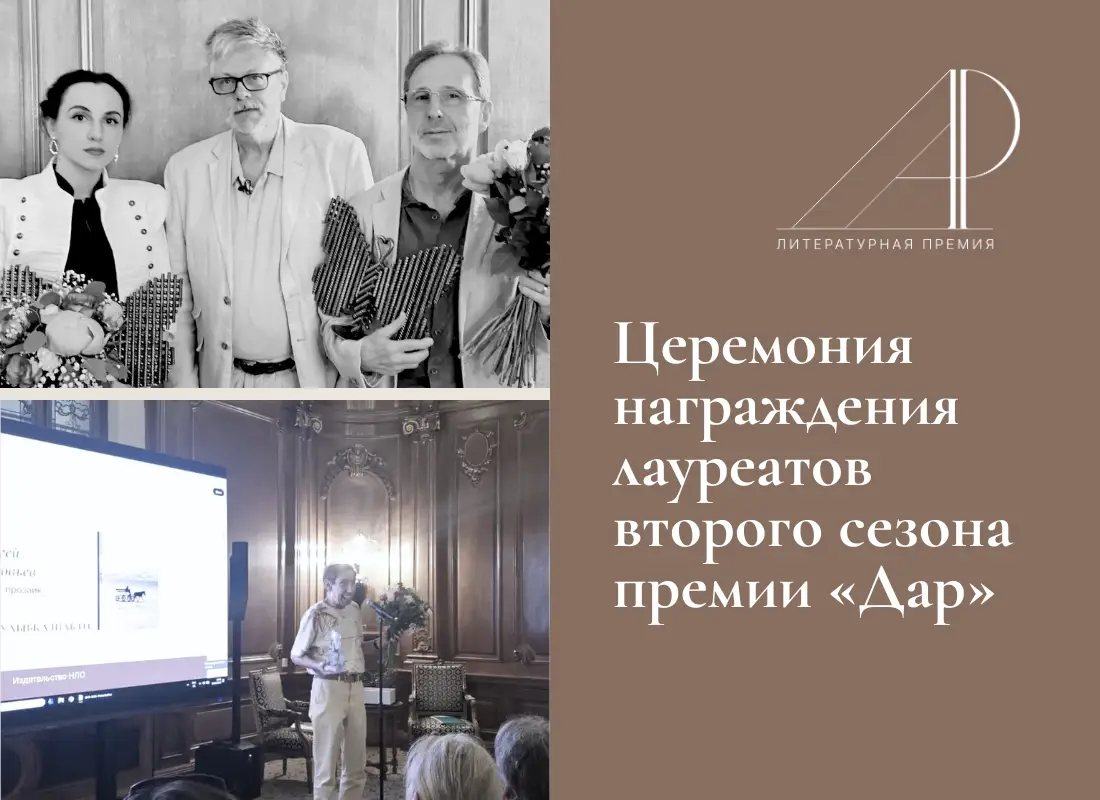
On June 19, 2026, the award ceremony for the winners of the second season of the Dar Prize took place in Montreux, Switzerland. The prize is a grant for translation into three languages: English, German, and French.

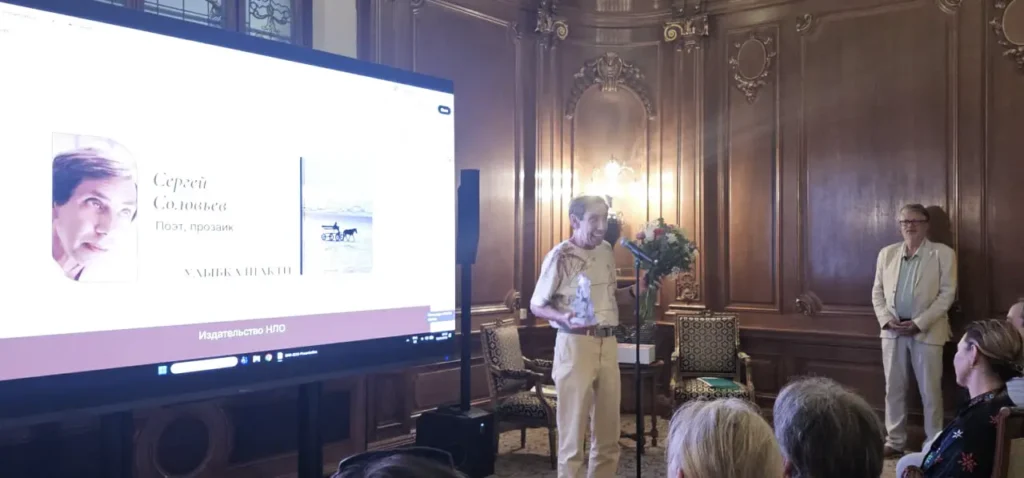

Present at the ceremony were the winners Alexandra Krashevskaya ("Lullaby for Mariupol"), Oleg Radzinsky (“Penitential Days”) and the winner of the readers’ vote of the first season Sergei Solovyov (“Shakti's Smile”). They were presented with special prizes created by sculptors Konstantin Benkovich and Igor Frolov. The third winner, Ksenia Buksha ("A Little Paradise"), was unable to attend the ceremony and will take part in the award ceremony for the winners of the third season.
Once again, congratulations to the winners! On July 15, submissions open for the third season of the DAR Prize competition.

What Are the Objectives of the Award?

The primary goal of the Award is to support authors and promote Russian-language literature worldwide. We welcome all who write and read in Russian, regardless of citizenship or place of residence. We aim to foster a Russian-language culture free from political and imperial influences.
How Is the Award Process Conducted?
The Prize is awarded annually. The Jury holds a vote in which each member selects between one and three works. The author whose work receives the highest number of votes becomes the winner.
What Awards Are Provided?
The Prize winner receives a grant for the translation of their work into English, French, and German.
When Does the Submission Period for the Competition Start and End?
Submissions for the third season of the prize will open on July 15, 2026, and close on October 15, 2026.
When will the list of finalists and winners be announced?
On January 20, 2027, the Council of Experts will announce the shortlist. The Independent Jury will announce the winner on May 25, 2027.
What are the conditions for the nomination of a book for the award
Works published in 2025 are eligible for the third season of the competition. Eligible works (novels, novellas, short story and essay collections, documentary prose) may have been published either as standalone editions or in literary magazines. Nominations may be submitted by publishing houses and magazine editorial boards, as well as by the authors themselves or third parties (with the author's consent and written confirmation). Texts must be submitted for consideration in electronic format. The DAR Prize is open to all authors. Given the prize's main goals — promoting contemporary Russian-language literature outside of Russia — and the nature of the award itself (a translation grant), priority will be given to authors whose works have not previously been translated into English, French, or German.