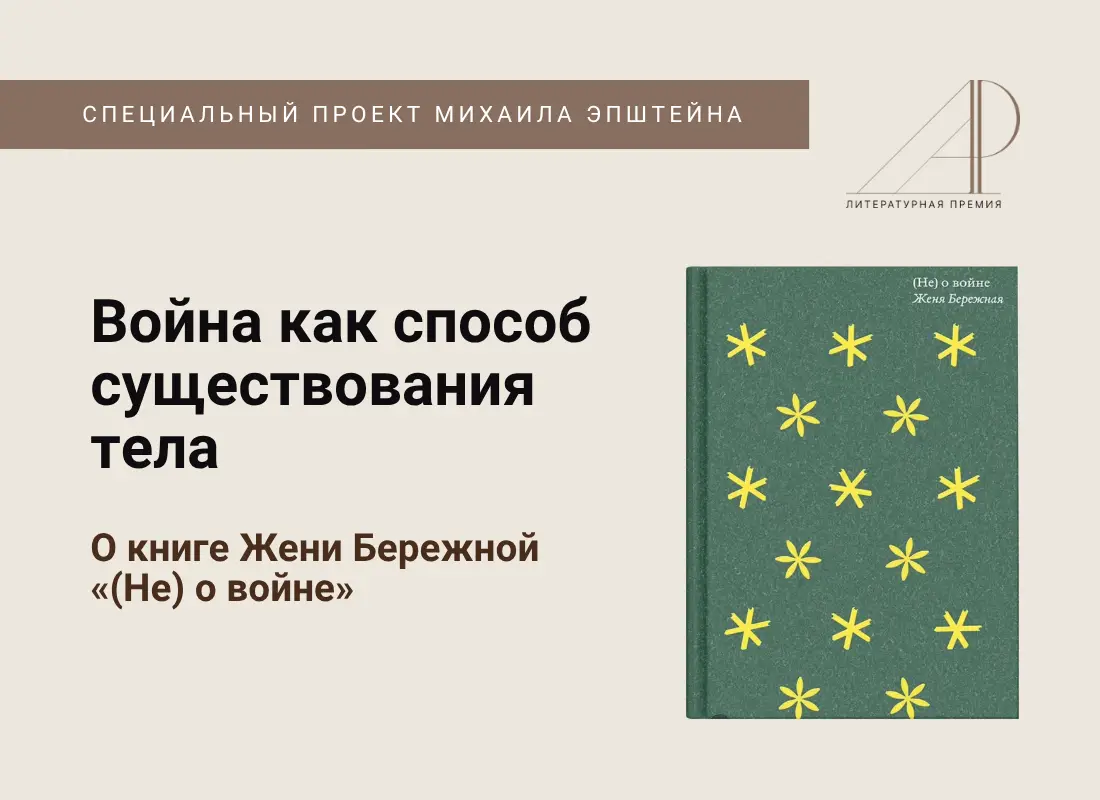
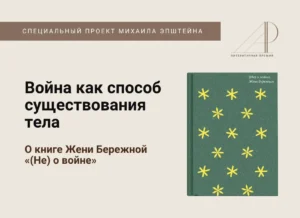
On Zhenya Berezhnaya’s book (Not) About WarRiga: Meduza Publishing, 2024. 268 pp.
The Word to Claude. A Special Project by Mikhail Epstein
(Not) About War is a book that resists genre definition. Formally, it is about a writer from Kyiv who flees the bombs with her husband and two cats, passes through Romania into Germany, settles in, loses the grandmother she never had the chance to say goodbye to, and finds a new home. But this is only the surface. Beneath it lies the physiology of fear, the anatomy of flight, a chronicle of how war takes up residence inside a person and begins to live there a life of its own.
Berezhnaya builds the text as a double spiral. The first is a prose chronicle: February 24, the bomb shelter in an underground parking garage, evacuation through Yaremche and Bucharest, German addresses, Kleinmachnow, Bernau, Berlin, Darmstadt, Kulmbach. The second is a series of poetic epigraph-incantations opening each chapter. These two spirals do not illustrate one another, they remain in constant tension: poetry tries to cast a spell over chaos, while prose records its untamable force.
Structure and Genre
The book is divided into two parts, whose boundary reflects two aggregate states of catastrophe. The first part is flight, physical survival, shock: “War Begins,” “Escape,” “Bine aţi venit în România,” “Dodo,” “The Tall House,” “The War Within.” The second is an attempt at rooting oneself again, coming to terms with loss, and the slow return of the ability to feel: “The Water Tower,” “Fires,” “Mother,” “In Ophelia’s Dress,” “Ludwig,” “Fish in the Sky,” “In Berlin Apartments,” “Altstadt Spandau,” “Star,” “Bells.” Each chapter is marked geographically and chronologically: “February 2022, Kyiv,” “March 2022, Bucharest,” “December 2022, Kulmbach.” This creates the effect of a logbook, a record of the body’s movements through space, while the soul remains stuck somewhere between the air raid siren and the underground parking garage.
In genre terms, this is a hybrid: autobiographical nonfiction plus lyric confession, documentary testimony, and a cycle of poems. The brackets in the title, (Not) About War, are the key to understanding it: war is everywhere, and yet the book is still about something else. About a body nauseated by fear. About strangers reaching out a hand. About the impossibility of saying goodbye.
Central Images
The dominant image s the body.Berezhnaya writes with the body: nausea, chills, heart palpitations, insomnia, the acrid sting of gasoline in the underground parking garage, the impossibility of relaxing one’s shoulders. But the body in the book is not only the author’s: there are also the bodies of her cats, Ishtar and Sigurd, carried in pet carriers across borders and wrapped up against drafts. The cat is a small hostage of catastrophe, and caring for it becomes a form of self-preservation.
The second key image is the garden.The opening poem reads: “In my garden apples bake in the sun, pomegranates rot, / No one is there to pick them, my garden is guarded by soldiers: / Blind, deaf, trained to the smell of blood.” The garden is the lost paradise, the past, life before the war. The soldiers are not guardians but occupiers. The image works like a formula: the world has been seized, and it is impossible to return to it, even if physically you are still there.
The third image is the gift.The book is permeated by the gifts of strangers: Dodo, the Romanian woman in Bucharest; Beate, the German woman in Bernau; the mysterious Ludwig, who will eventually take the heroine to his parents’ house in Kulmbach for Christmas. Help comes from where it is least expected. This is not sentimentality, but an acknowledgment: in catastrophe one discovers the humanity of other people. The title of the prize resonates deeply with the book.
Language and Style
Berezhnaya’s prose is nervous, broken, physiologically convincing. Short sentences alternate with breathless periods. Registers shift without warning: from domestic detail, “I stuff the papers into the far pocket of my backpack,” to poetic image. Multilingualism feels organic: the Romanian greeting “Bine aţi venit în România,” German place names, remembered names of Kyiv breads, “Belarusian,” “Yurievsky,” this is not exoticism, but the reality of an émigré consciousness forced to exist simultaneously in several languages and several times.
The poetic fragments work differently: they slow time down, create a space for reflection, and cast a spell. Their function is almost ritual: the poem as amulet, as an attempt to structure chaos through language. The dedication to her grandmother Zoya, “for whom I will forever remain a writer composing fairy tales,” gives the entire book its elegiac undertone.
Central thesis / situation: A writer from Kyiv flees Kyiv with her husband and two cats, recording not events, but bodily states. War is not outside, but inside. Document turns into poetry, and poetry into incantation.
CORE PARAMETERS
A₁ — Unexpectedness of the situation: 7/10.
The subject of refugee flight after February 24 has already been described many times. Yet the angle of vision, the physiology of fear, the body as protagonist, is relatively new. The double spiral of prose and poetry is not a unique device, but here it works organically. The bracketed title is a precise conceptual gesture. The presence of two cats as companions, as hostages of catastrophe, adds a dimension rarely found in literature about war.
A₂ — Realization in action: 7/10.
The bodily line is carried through consistently, from the first nausea in the bomb shelter to the return of appetite in Marmaris: “for the first time since February 24, I feel hungry.” The geography is precise, the chronology clear. The poetic epigraphs are not decorative, but structurally necessary. The image of the garden and the soldiers works as a recurring metaphor. There are some weaker passages in the second part, settling into Berlin, apartment searches, at times become monotonous, but the overall architecture holds.
B — Credibility: 9/10.
This is the text’s chief virtue. It is written from inside the experience, not after the fact. The details are exact: the app with air-raid alerts, curfew, the acrid gasoline in the underground parking garage, cats in carriers, a stun gun in a backpack. The psychological credibility is high: panic attacks, dissociation, the inability to relax. The author is not afraid of the ugly, the weak, the shameful, and in that honesty lies her strength.
MODULATING PARAMETERS
C — Interpositionality: 6/10.
The voice of the author-heroine dominates almost absolutely. Husband, mother, grandmother, Dodo, Beate, Ludwig, all are present, but as functions rather than as independent consciousnesses. This is a deliberate choice: the book is a monologue, an introspection. But greater polyphony would have enriched the text. Dialogues are brief, the inner worlds of the other characters remain closed.
D — Openness: 7/10.
The ending is December 2022, Kulmbach, bell-ringing, Christmas in Ludwig’s parents’ house. It is not a happy ending, but not a tragedy either, rather a pause, a breath before the next stage. The question “what next?” remains open. Yet the overall trajectory, from catastrophe to resettlement, is fairly predictable. The book does not pose insoluble questions, it records experience.
E — Rhythm: 7/10.
The first part is stronger: greater tension, speed, physical intensity. The second part sags in places: furnishing an apartment, a trip to IKEA for furniture, necessary for realism but weaker in energy. The poetic insertions work as caesuras, giving the reader a pause. The climaxes are the escape from Kyiv, the meeting with Ludwig, and the final tolling of bells.
F — Resonance: 8/10.
The themes are universal: war and the body, flight and rooting, loss and finding. The experience of Ukrainian refugees in 2022 resonates with any experience of exile. The poetic register expands the audience beyond “books about war.” The translation potential is high: the theme matters to European readers, and the style is translatable.
CALCULATION
Core = (A₁ + A₂) × B / 10 = (7 + 7) × 9 / 10 = 12.6
M = C + D + E + F = 6 + 7 + 7 + 8 = 28
Modulator = 1 + M/40 = 1 + 28/40 = 1.70
II = 12.6 × 1.70 = 21.4
VERDICT: Excellent (range 20–30)
(Not) About War is a documentarily precise, stylistically expressive, emotionally intense text. Its high credibility (B = 9) compensates for the relative predictability of the situation (A₁ = 7). This is not a formal experiment, but testimony, testimony transformed into literature.
Comparative Context
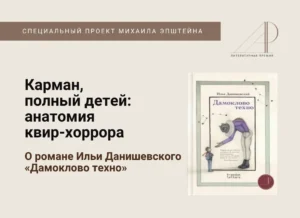
On the current shortlist, (Not) About War (21.4) stands alongside Danishevsky’s Damocles Techno (22.4) and Petrov’s Parents’ Day (21.8). All three texts work with the trauma of war, and all three use hybrid form. The difference lies in the type of writing: Danishevsky constructs a palimpsest of cultural layers, fairy tales, games, mythology; Petrov writes a father’s testimony about a dead son; Berezhnaya records the bodily states of flight. Danishevsky imagines, Petrov remembers, Berezhnaya registers.
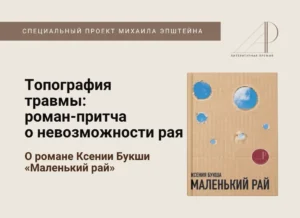
Compared with Buksha’s A Little Paradise (24.6), both books explore catastrophe through the prism of place. Buksha creates a mythology of place; Berezhnaya a geography of flight. Buksha is polyphonic, Berezhnaya monologic. Buksha works with history, Berezhnaya with the present.
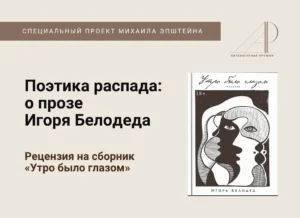
Compared with Beloded’s Morning Was an Eye (21.6), both texts are radically personal. Beloded explores the disintegration of consciousness, Berezhnaya the disintegration of the familiar world. Both resist linear narrative. But Beloded is more formally experimental, while Berezhnaya is more accessible.
From the point of view of the aims of the Dar Prize, translation into European languages, (Not) About War has very high potential. The theme of Ukrainian refugees is highly relevant to European readers. The experience is universal: this is the story of any exile. The poetic register adds literary value. The text could find an audience among readers of Svetlana Alexievich and Olga Tokarczuk.
See also:

What Are the Objectives of the Award?

The primary goal of the Award is to support authors and promote Russian-language literature worldwide. We welcome all who write and read in Russian, regardless of citizenship or place of residence. We aim to foster a Russian-language culture free from political and imperial influences.
How Is the Award Process Conducted?
The Prize is awarded annually. The Jury holds a vote in which each member selects between one and three works. The author whose work receives the highest number of votes becomes the winner.
What Awards Are Provided?
The Prize winner receives a grant for the translation of their work into English, French, and German.
When Does the Submission Period for the Competition Start and End?
Submissions for the third season of the prize will open on July 15, 2026, and close on October 15, 2026.
When will the list of finalists and winners be announced?
On January 20, 2027, the Council of Experts will announce the shortlist. The Independent Jury will announce the winner on May 25, 2027.
What are the conditions for the nomination of a book for the award
Works published in 2025 are eligible for the third season of the competition. Eligible works (novels, novellas, short story and essay collections, documentary prose) may have been published either as standalone editions or in literary magazines. Nominations may be submitted by publishing houses and magazine editorial boards, as well as by the authors themselves or third parties (with the author's consent and written confirmation). Texts must be submitted for consideration in electronic format. The DAR Prize is open to all authors. Given the prize's main goals — promoting contemporary Russian-language literature outside of Russia — and the nature of the award itself (a translation grant), priority will be given to authors whose works have not previously been translated into English, French, or German.